
Mortgage Rates Then vs. Now: What Decades of Data Mean for Beverly Hills Buyers
From the double-digit rates of the 1980s to today's market, a historical look at mortgage rates reveals why savvy luxury buyers know that timing — and perspective — are everything.
If you've been watching mortgage rates lately and wondering whether now is a good time to buy, you're not alone. It's a question I hear from clients every week. The answer, as with most things in real estate, depends heavily on context — and context means history.
Let me walk you through what decades of mortgage rate data actually tell us, and what it means if you're considering a luxury purchase in Beverly Hills, Bel Air, or Holmby Hills today.
The 1980s: When 18% Was Reality
It's hard to imagine today, but in October 1981, the average 30-year fixed mortgage rate peaked at 18.63% — the highest ever recorded in U.S. history. The Federal Reserve, under Chairman Paul Volcker, had aggressively raised interest rates to combat runaway inflation that had plagued the country throughout the late 1970s.
To put that in perspective: a $1 million loan at 18.63% would carry a monthly payment of roughly $15,600 — interest alone. Buyers who purchased during that era were not doing so because rates were favorable. They bought because they understood that real estate, particularly in prime markets like Beverly Hills, holds and appreciates over time regardless of the financing environment.
And they were right. Those who held their properties through the 1980s and into the 1990s saw extraordinary appreciation.
The 1990s: Gradual Relief
As inflation was brought under control, rates began a long, slow descent. By 1993, the 30-year fixed rate had fallen to around 7% — still high by today's standards, but a dramatic improvement from the decade prior. The mid-to-late 1990s saw rates hover between 7% and 9%, fueling a robust real estate expansion across Southern California.
Beverly Hills in particular experienced a renaissance during this period, with international buyers — particularly from Asia and the Middle East — recognizing the enduring value of Los Angeles luxury real estate.
The 2000s: The Era of Easy Money
The early 2000s brought rates down further, dipping below 6% for the first time in decades. Combined with loosened lending standards, this created the conditions for the housing boom — and ultimately the bust — of 2007–2008.
The financial crisis that followed was a painful correction, but it also reinforced a fundamental truth about luxury real estate: prime properties in irreplaceable locations recover. Beverly Hills home values, while they dipped, never collapsed the way mid-tier suburban markets did. By 2012, the luxury market was already rebounding.
The 2010s: The Historic Low-Rate Decade
The decade following the financial crisis was defined by historically low interest rates, a deliberate policy choice by the Federal Reserve to stimulate economic recovery. Rates fell steadily, reaching a then-record low of around 3.3% in late 2012.
This era fundamentally reshaped buyer expectations. A generation of buyers came to view sub-4% rates as normal — even as a right. For luxury buyers, these rates dramatically expanded purchasing power. A $3 million loan at 3.5% carried a monthly payment of approximately $13,470. The same loan at 7% would cost $19,950 per month.
2020–2021: The Pandemic Floor
In response to the economic shock of the COVID-19 pandemic, the Federal Reserve slashed rates to near zero. By January 2021, the 30-year fixed mortgage rate hit an all-time low of 2.65%. The result was a buying frenzy unlike anything the market had seen — including in the luxury segment.
Buyers who locked in rates at 2.65%–3% during this window secured generational financing. Many of those buyers are now sitting on significant equity and have little incentive to sell, which is one reason inventory in the Beverly Hills luxury market has remained constrained.
2022–2024: The Rapid Reset
What followed was one of the most aggressive rate-hiking cycles in Federal Reserve history. In an effort to combat post-pandemic inflation, the Fed raised its benchmark rate 11 times between March 2022 and July 2023. Mortgage rates surged from under 3% to over 7% in less than 18 months — a shock to a market that had grown accustomed to cheap money.
Transaction volume slowed. Some buyers stepped back. But in the luxury segment — particularly at the $3M+ price point — the impact was more muted than in the broader market. Cash buyers, who represent a significant share of Beverly Hills transactions, were largely unaffected. And for those financing, the calculus shifted: buyers focused more on the asset itself and less on the rate, knowing that refinancing is always an option when conditions change.
Where We Are Today
As of late 2026, 30-year fixed mortgage rates are hovering in the 6.5%–7% range — elevated compared to the pandemic lows, but well within the historical norm when viewed across five decades.
Here is the broader picture:
| Decade | Average 30-Year Fixed Rate |
|---|---|
| 1980s | ~13% |
| 1990s | ~8% |
| 2000s | ~6% |
| 2010s | ~4% |
| 2020–2021 | ~3% |
| 2022–2024 | ~6.5%–7.5% |
| 2025–2026 | ~6.5%–7% |
The takeaway? Today's rates are not historically high. They feel high only because we are comparing them to an extraordinary and anomalous period of near-zero rates that lasted roughly a decade.
What This Means for Luxury Buyers in Beverly Hills
1. The asset matters more than the rate. In a market like Beverly Hills, where supply is permanently constrained and demand is global, the property itself is the primary investment. Buyers who waited for rates to return to 3% have, in many cases, watched prices appreciate faster than any rate savings would have offset.
2. Cash is king — but financing is still strategic. A significant portion of luxury transactions in Beverly Hills are all-cash. For those who do finance, working with a private bank or jumbo lender who understands the nuances of high-value transactions is essential. Rates for well-qualified luxury buyers with strong asset profiles can often be negotiated below the headline rate.
3. Marry the house, date the rate. This phrase has become something of a cliché, but it holds real wisdom. You can refinance a mortgage. You cannot go back and buy a specific property on a specific street at a specific price. The right home, at the right time, in the right location, is worth acquiring even in a higher-rate environment.
4. Rate cycles are temporary; Beverly Hills is permanent. Every rate cycle in history has eventually reversed. Buyers who purchased in 1982 at 16% refinanced in 1993 at 7%. Buyers who purchased in 2023 at 7.5% will have the opportunity to refinance when rates moderate. The property they own in the interim will likely have appreciated.
A Final Thought
I've been working in Beverly Hills real estate for over 15 years, and I've seen clients make decisions based on rate anxiety that they later regretted — not because rates didn't eventually come down, but because the property they passed on was no longer available when they were ready.
The most successful luxury buyers I've worked with share a common trait: they focus on the long-term value of the asset, not the short-term cost of financing. They understand that in a market like Beverly Hills, the question is rarely whether to buy — it's what to buy and who to trust to guide them through it.
If you're weighing a purchase and want to talk through the numbers in the context of today's market, I'm always available for a confidential conversation.
Carmen Berg is a luxury real estate advisor with Coldwell Banker Realty, specializing in Beverly Hills, Bel Air, and Holmby Hills. DRE #01869722.
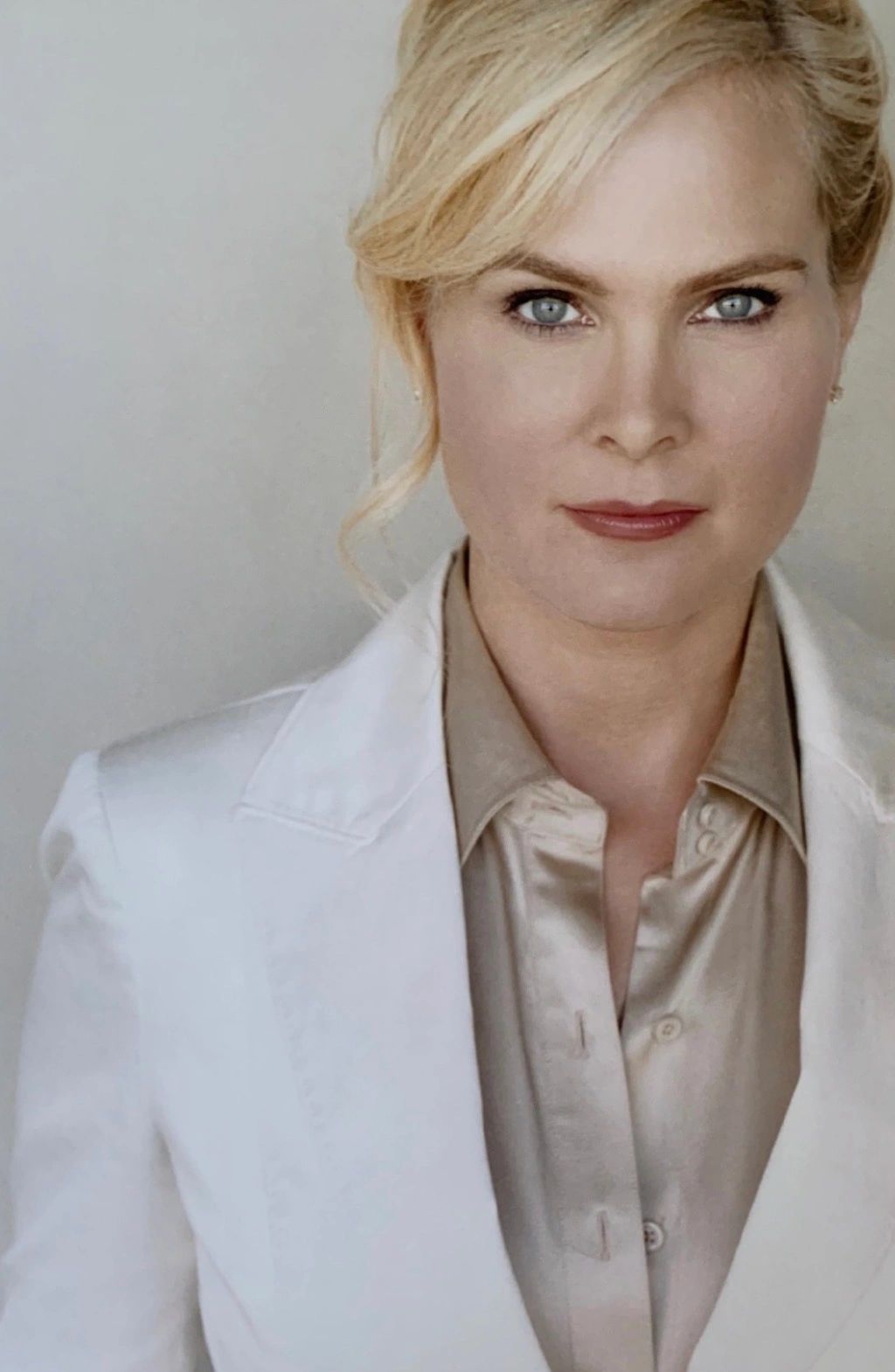
Carmen Berg
Luxury Real Estate Advisor · DRE #01869722


